
You already did the hours. Now they have to appear in writing.
Homologación of your occupational therapy degree to the Spanish one, before the Ministry. The assessment turns on a handful of numbers — years of study, credits and supervised placement hours — and the whole job is getting your university to certify them in a form that can be read here.
Dependency care, geriatrics, mental health, early intervention. The demand is there; what is missing is people who know their degree can be homologated.
Three numbers worth more than twenty pages of theory
Occupational therapy files are not usually lost on content. They are lost on arithmetic: years of study, credits, and above all the supervised placement hours — how many, where, and certified by whom. Spanish assessors work from a reference of around four years and roughly a thousand placement hours, and if your transcript records only subject names and marks, none of that is visible. Add a badly apostilled degree or a translation that is not sworn and you have turned a nine-month file into a two-year one.
The battle in this file is not fought at the Ministry. It is fought at your university’s records office, asking for the certificate nobody told you that you needed.
You are an occupational therapist, and your transcript does not say so clearly enough.
- Your certificate lists subjects and marks but never states placement hours.
- You do not know how many hours you need to evidence, or in what form.
- Your university is slow to issue anything beyond a standard transcript.
- You are not sure which documents need an apostille and which need a sworn translation.
- A requerimiento arrived and you do not know how to answer it without damaging the case.
- You did not even know occupational therapy was homologable in Spain.
The worst part is that almost every one of these blockages is avoidable before the file is submitted — if somebody reviews it properly first.
From your degree to practice: the stages
The numbers first
Years, credits and placement hours. We work out what your transcript already proves and what has to be requested from your university, which is usually the slowest step of all.
Auditing the file
Degree, transcript, placement certificate, apostilles and translations, checked before anything is submitted.
Application and assessment
Filed online with the Ministry. Currently 9 to 24 months depending on the file.
Credential and registration
With the credential you register with the professional council of your region. Without registration there is no lawful practice.
What almost nobody explains about homologating occupational therapy
A field with real demand in Spain and, compared with medicine or nursing, remarkably little competition.
Worth knowing
- Why placement hours, not theory, are what the assessment actually turns on.
- Why the certificate you need is rarely the standard one your university issues.
- Where the demand is: dependency care, geriatrics, mental health, early intervention.
What you gain
- Knowing exactly which certificate to request, and requesting it early.
- A file submitted in a state that minimises the chance of a requerimiento.
- Registration prepared in advance, ready the moment the credential arrives.
Mistakes that delay your case
- Submitting a transcript that lists subjects but never states hours.
- Leaving the request to your university until after the file is open.
- Translating without a sworn translator recognised by the Foreign Ministry.
- Confusing a Hague Apostille with consular legalisation.
What you need to know
- Exactly which documents the Ministry requires today.
- Whether your nationality means you need to evidence Spanish.
- That homologating is not practising: registration comes after.
Requirements for occupational therapy homologation in 2026
The file is submitted online to the Ministry, within the framework of RD 889/2022. These are the pillars.
Legalised degree
The original, apostilled under the Hague Convention or legalised through consular channels if your country is not a signatory, scanned in the format the portal accepts.
Transcript and placement hours
Subjects, credits and — the decisive piece — a certificate stating supervised placement hours, where they were completed and who supervised them.
Sworn translation
Every document not in Spanish needs translating by a traductor jurado recognised by the Spanish Ministry of Foreign Affairs. Documents from Spanish-speaking countries do not.
Identity, fee and language
A valid passport, payment of the official fee and, for nationals of countries where Spanish is not an official language, the corresponding Spanish language certificate.
We work out which numbers are missing, and go and get them.
We read your transcript against what the Spanish degree requires and tell you precisely which figures are missing — years, credits, placement hours — and what your university has to certify. Then we help you ask for it in terms a records office will actually action, which is a skill of its own.
From there the usual: apostilles, sworn translations, filing, and answering anything that comes back. And we stay to the registration, which is the step that lets you work.
We are not the administration and we do not act on its behalf: we are the ones who prepare your case so the administration has nowhere to stop it.

The questions people ask before they start
How many placement hours do I need to evidence?
The Spanish degree is built around roughly four years of study and in the order of a thousand supervised placement hours, and that is the reference your training gets compared against. The exact figure the assessor works from depends on the framework in force when you file, which is why we check it against your case rather than quoting a number that may have moved. What does not change is the principle: hours you cannot evidence do not count, however many you actually did.
My university only issues a standard transcript. What do I do?
You ask for something more, and you ask early. What these files need is a certificate that states placement hours, the centres where they were completed and who supervised them — which is rarely the document a records office produces by default. It is also, routinely, the slowest part of the whole process, because it depends on an institution in another country with its own pace. Starting that request before the file is open, rather than after a requerimiento arrives, is the single biggest time saving available to you.
Is there actually work for occupational therapists in Spain?
Yes, and in more places than people expect: dependency care, geriatrics, mental health services and early intervention all employ occupational therapists, and the field has nothing like the applicant volume of medicine or nursing. The obstacle is rarely demand. It is that many qualified therapists abroad never find out their degree is homologable at all.
How long does it take?
The current range runs from roughly 9 to 24 months, depending on the country that issued the degree, the university, how complete the file is, and how any requerimientos are answered. In occupational therapy the variable that most often decides where you land in that range is how quickly your university issues the placement certificate.
What does it cost?
The cost combines the official Ministry fee, the expense of apostilles or legalisation and sworn translation, and our fees for preparing and defending the file. There is no single tariff: it depends on the country of origin, the state of your documentation, and whether you are carrying a requerimiento or an earlier refusal. Once we have studied your case we give you a fixed quotation. Official amounts are set by the rules in force at the time of filing.
Not a doctor? We homologate all twelve regulated healthcare professions.
Each has its own ministerial order, its own professional body and its own traps. Pick yours and we will tell you how yours actually works, not “homologation” in the abstract.
Medicine
Medical degree homologation, plus work permit, colegiación and the MIR.
See detailsNursing
Nursing degree homologation, registration, and access to the EIR.
See detailsDentistry
Dental degree homologation and the registration you need to practise.
See detailsPhysiotherapy
Physiotherapy degree homologation and professional registration.
See detailsPsychology
Careful: the degree itself is not homologated. What is, is the Psicólogo General Sanitario.
See detailsPharmacy
Five years and 3,000 hours of clinical training: the two numbers ANECA looks at.
See detailsVeterinary medicine
Clinical work, yes. But also animal health and food safety.
See detailsSpeech and language therapy
If your country called it fonoaudiología, this is it: the same profession.
See detailsOptics and optometry
An optometrist is not an ophthalmologist: two different homologations.
See detailsPodiatry
In Spain this is a university healthcare profession, not a technical trade.
See detailsOccupational therapy
Four years and 1,000 placement hours. Plenty of demand, little competition.
You are hereNutrition and dietetics
Only the university degree is homologated. Nutrition courses are not.
See detailsYou already did the hours. Let’s get them on the record.
We work out which figures your file is missing, help you obtain them, submit the file complete, and stay with you through to registration.
+34 667 77 02 19·+34 667 78 20 85
infoglobalextranjeria@gmail.com
Camino de Coín 14, 29640 Fuengirola (Málaga)
P.S. like the navigator in the story, you can have crossed the ocean and still be kept ashore for want of a logbook. You already have the thousand hours in your hands. What has to be arranged is that they exist in writing. That is the part we do.
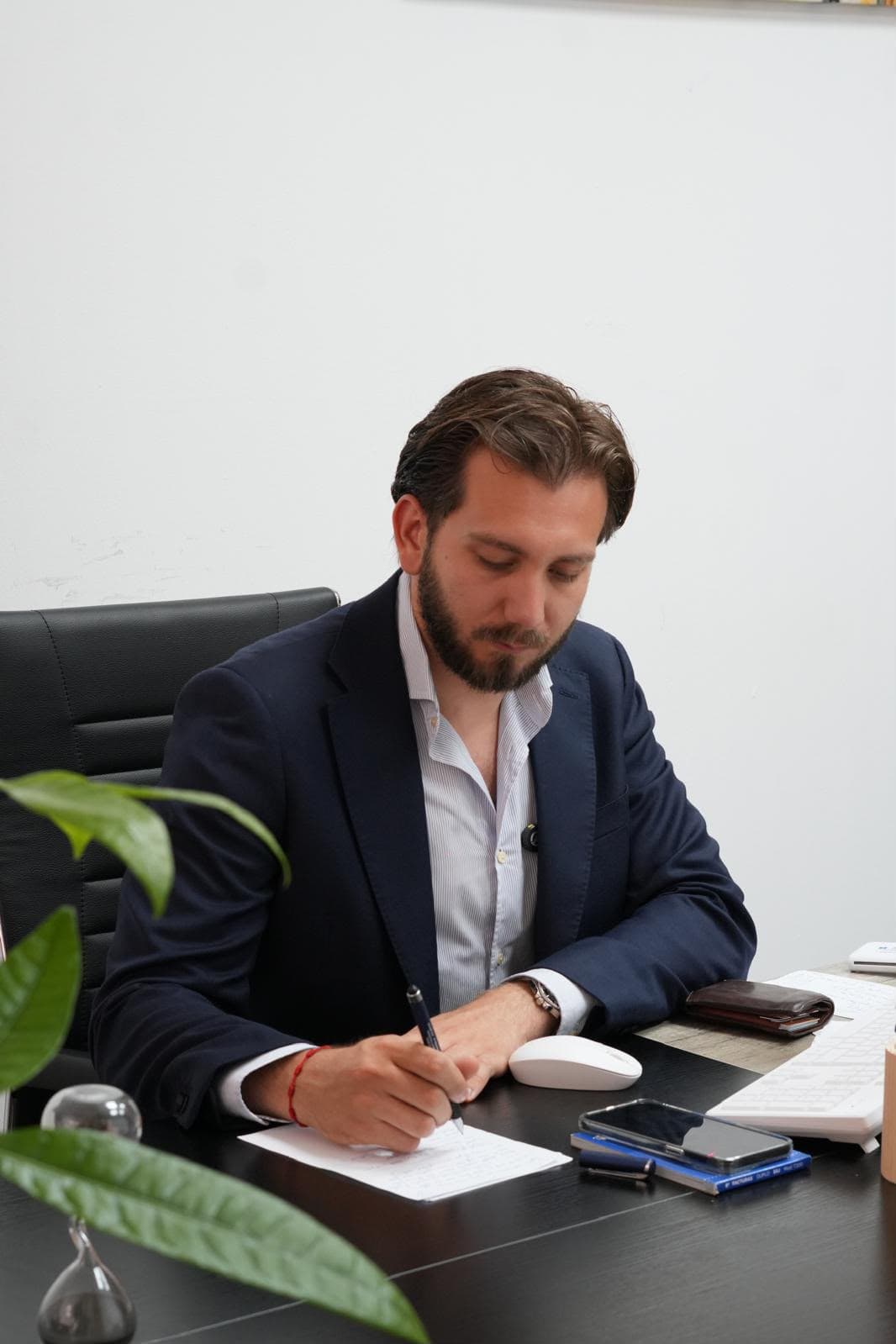
Content reviewed by a lawyer
Reviewed by Alberto García López
Immigration lawyer · bar number 11.441 · ICA Málaga
We review every page against the rules currently in force. This information does not replace an individual assessment of your case.

The content of this page is for information only and does not constitute individual legal advice. Every immigration case requires its own assessment.
Globalium is an independent law firm: we are not a public administration and we are not affiliated with one. Homologation, equivalence and the recognition of qualifications are granted exclusively by the competent Ministry, and you may apply to it directly yourself. Our fees pay for legal advice and representation, and are separate from official fees and public charges.